

Cancer Care During Extreme Weather: Precautions and Considerations

Blizzard on the road.With winter upon us, it is important for cancer patients to be prepared in the case of severe weather. During severe weather, such as a blizzard, it may be difficult to get to Weill Cornell Medicine. All of our physician practices have coverage 24 hours a day, 7 days a week, so if you have any urgent questions or concerns, please call the regular number and you will be able to reach the on-call physician.

If you are due for an infusion or injection during an episode of severe weather, we can discuss the risks/benefits of finding a safe way to get to the treatment center vs. delaying treatment vs. finding an alternative temporary treatment center.

Storms can cause travel delays, especially on roads, so consider allowing for extra time and taking public transportation whenever possible. Drive slowly, and remember that injuring yourself in an accident may also impact your cancer care. It may also be an option for you to stay in a hotel near the hospital to avoid hazardous road conditions.

NewYork-Presbyterian Hospital Weill Cornell Medical Center is open to serve patients 24 hours a day, 7 days a week. In the event that the outpatient center is closed or unavailable due a natural disaster (which is rare), the emergency department will likely be open.

If you are uncertain about travel conditions, the emergency hotline is 212-746-WCMC (9262). Travel alerts for road conditions are released by the Metropolitan Transit Authority (MTA). If you are having a medical emergency or need an ambulance, dial 212-472-2222 or 911.

For people undergoing cancer treatment, blizzards and cold winter weather can impact more than just the ability to travel to treatment. Patients are more susceptible to hypothermia since side effects of treatment can be dehydration, fatigue, and anemia. Patients undergoing or having previously received certain types of chemotherapy can experience extreme sensitivity to the cold. Other chemo patients can actually feel less sensitivity to the cold and a decreased sensation in the hands and feet. This may lead to a major problem because it puts you at risk for frostbite since you are unaware of how cold it really is. Also, patients with lower than normal amount of platelets in the blood, might result in more serious bruising or bleeding with an injury or fall.

It’s important that patients feel safe and prepared to “weather the storm” during severe weather, including a loss of power or blackout. When weather or other issues can be anticipated, make sure you have enough medication and food/supplies on hand.

In general, but especially after severe inclement weather, be sure to communicate with your physician and healthcare team if anything out of the ordinary happened. For example, close the communications loop if you ended up going somewhere else for treatment or ran out of medication. This way we can make sure we update your medical records.

Most importantly, trust your instincts and don’t panic in bad weather. Wishing everyone a very safe rest of winter!
8 Tips for a Healthy Mouth During Cancer Treatment

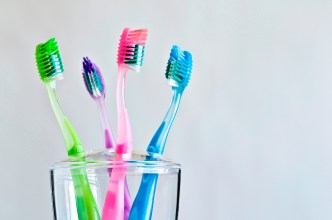
Four different colored toothbrushes in toothbrush holder.We grow up learning certain truths regarding the need to brush our teeth at least twice a day and visit the dentist on a regular basis, but during cancer treatment, our mouth needs can change.

Cancer treatment is designed to fight the cancer cells in your body, but in doing so can have a wide range of side effects. One of the main side effects of chemotherapy, the standard treatment for prostate, bladder, and testicular cancers, is changes that occur in the mouth. Chemotherapy can lower white blood cell, platelet, and red blood cell counts throughout the body, so patients are at increased risk for infections. Gum diseases, dental abscesses, and cavities are all infections that are prone to worsen during treatment.

While killing cancer cells, cancer treatment can also harm normal cells, such as the cells in the mouth. This can cause problems with your mucosa and gums (the soft lining of your mouth) and the glands that make saliva. Additionally, both chemotherapy and radiation treatment can cause mucositis, a side effect that involves an inflammation of the lining of the mouth and can lead to red, painful sores.

Here are 8 tips to maintain good oral hygiene and ease mouth pain during cancer treatment:

  1. Visit your dentist early in treatment. See if your doctor can identify potential sources of dental infection or irritation prior to starting chemotherapy. Get any dental cleanings, teeth extractions, and fillings at least 2 weeks before starting treatment. This will help to prevent mouth problems so that you can get the most out of your cancer treatment.
  2. Brush your teeth. During treatment, do not neglect brushing your teeth at least 3 times a day. Use a brush with soft bristles and be gentle on your gums. Consider using a toothpaste designed for sensitive teeth and gums, and make sure that your toothpaste contains fluoride to prevent cavities and tooth demineralization, especially if you have a dry mouth. If you wear dentures, make sure that they are adjusted properly with a comfortable fit. Brush and rinse your dentures after meals and do not wear them while sleeping.
  3. Keep your gums healthy. Floss regularly as long as your platelet count is above 20,000. This is to minimize inflammation of the soft tissues in your mouth which can lead to dental disease, bleeding and infection if your blood counts are low. If possible, start a good flossing routine prior to starting chemotherapy so that your gums are healthy going into treatment.
  4. Pay attention to what you eat. What you put in your mouth matters, and not just in terms of maintaining a balanced diet during treatment. Read package labels to find out what’s in the foods you’re eating, as this will help determine what may irritate your mouth. Hot and spicy sauces can increase pain and sensitivity, especially if you have sores in your mouth. Caffeinated beverages and alcohol can increase mouth dryness, and vinegars, citrus and tomato juices have a lot of acidity which can also irritate the mouth. Be in tune with which foods might be triggers, and if eating out, ask whether sauces and dressings can be omitted or served on the side.
  5. Modify your diet as needed. If your mouth is sore, eating soft, bland, room-temperature food may help. If your mouth is dry, you can add extra moisture to foods in the form of sauces, oils, milk or broth to aid in swallowing. Foods such as eggs, yogurt, cottage cheese, soups, cooked vegetables, pudding, milkshakes and smoothies can often be tolerated when your mouth is sore or dry. If you experience taste changes, experiment with different foods at different temperatures.
  6. Cut down on sugar. Avoid foods that have a lot of sugar because your teeth are more vulnerable to infections and cavities during cancer treatment. Beware of sugar content in beverages such as soda, juice, coffee, tea and sports drinks.
  7. Rinse daily with alcohol-free mouthwash. Many types of mouthwash wash contain alcohol, which can burn your mouth and contribute to oral dryness. Keep your mouth moist with an alcohol-free mouthwash. If you suffer from dry mouth, suck on sugar-free lozenges to stimulate saliva flow. Keep your lips moist with a natural lipbalm containing bees-wax or lanolin to prevent chapping or cracking. Do not use petroleum based lip balms as these can contribute to lip dryness.
  8. Know when to speak up. Be sure to reach out to your healthcare team and dentist if you’re experiencing any of the following: Swelling or pain in the mouth or jaw, trouble swallowing, mouth ulcerations that do not heal within one week, white patches in the mouth, a burning mouth sensation, or severe oral dryness.

At Weill Cornell Medicine and NewYork-Presbyterian, we provide supportive oral care before, during and after cancer treatment. To learn more about the services we offer, click here. To make an appointment with a dentist at our center who specializing in treating cancer patients, please call Dr. Heidi Hansen at 212-746-5115.

For additional information about oral care during cancer therapy, visit the below links:
  • NCI: https://www.cancer.gov/about-cancer/treatment/side-effects/mouth-throat
  • American Dental Association: http://www.mouthhealthy.org/en/az-topics/c/cancer-dental-health
  • American Academy of Oral Medicine: Information on Dry Mouth, Information on Mucositis
  • NIH (oral mucositis): https://medlineplus.gov/ency/patientinstructions/000047.htm

Special thanks to Heidi Hansen, DMD for her contributions to this article.

Lutetium 177 Radioimmunotherapy Clinical Trial Open for Men with Rising PSA Levels

We have an open clinical trial using radioimmunotherapy for men who have been diagnosed with prostate cancer, and whose PSAs are rising despite initial hormonal therapy but have no evidence of metastatic disease on scans (no tumors seen on CT/MRI and bone scan). This clinical trial is investigating whether attaching Lutetium 177 with the monoclonal antibody J591 (177Lu-J591) can delay or prevent the disease progression to overt metastatic disease in men with “biochemical progression”.

J591 can recognize a protein antigen known as PSMA (also known as anti-prostate-specific membrane antigen) that is present on the surface of nearly all prostate cancer tumors and circulating tumor cells.

The targeted treatment in this trial uses J591 as a delivery vehicle for the radioactive treatment (Lutetium 177) to be delivered directly to the prostate cancer cells that may be hiding or circulating in the body (for example in lymph nodes, the blood stream or the bones).

The Lutetium 177-J591 treatment approach may be ideal for men who are experiencing rising PSA levels after primary prostate cancer treatment and early hormonal therapy, but whose bone and CT scans remain negative. Even though we can’t detect the presence of cancer on these traditional imaging scans, we know from prior research that these men have what we call “micro-metastatic” disease, meaning that the prostate cancer cells are increasing throughout the body because otherwise PSA levels would not be so high or increasing at such a rapid rate. Unfortunately, even with traditional hormonal manipulation, metastases become evident in these men after months. Although we have treated many men with overt metastatic prostate cancer and demonstrated anti-tumor responses, we have also shown that we are able to target these micro-metastatic sites (tumors that are too small to be seen on CT or bone scan), and the properties of 177-Lu make it more optimal for tumors that are too small to be seen on conventional imaging.

Many patients fall in this category in a broad sense and usually these men feel completely fine. Approximately 50,000 new men per year in the U.S. suffer a biochemical relapse (rising PSA after surgery or radiation) and some of these men will have further PSA rises despite the most common type or hormonal therapy, which are injections to bring down testosterone levels. The goal is to intervene earlier on in order to bring more men to cure and suppress the disease from further progression and metastases.

Men in this phase II study will be randomized and all patients will receive oral hormonal therapy as part of treatment which also serves to boost their PSMA level (i.e. increase the number of “locks” per tumor cell). Since PSMA is the target for 177Lu-J591, radioimmunotherapy increased expression of PSMA can lead to more targeting of the otherwise invisible tumor cells. Two-thirds of patients will receive 177Lu-J591 at the highest tolerated dose that improved outcomes based on our prior study and the remaining one-third will get J591 with a diagnostic isotope (111Indium). The isotope 111-Indium (abbreviated 111In) is also an energetic radioactive particle, but it does not generally give off enough energy to kill cancer cells while still allowing researchers to take more detailed pictures of where the prostate cancer is located in the body.

Our goal is to ultimately cure the men who fall in this category by eradicating microscopic deposits of cancer, and the Weill Cornell Genitourinary Oncology team is available for patient consultations and to speak with physicians who are interested in referring patients to this trial, which is available at a number of sites across the country.

Learn more about how this treatment works in this article and video: