
Each fall, Weill Cornell Medicine (WCM) and NewYork-Presbyterian (NYP) host a health and wellness seminar series – one seminar every week for a month – where physicians educate the local community about different types of health issues.
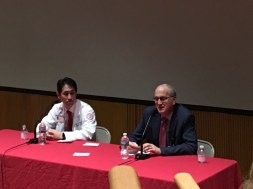 Last week, Dr. David Nanus, professor of medicine and urology at Weill Cornell Medicine and Dr. Scott Tagawa, medical oncologist and Director of the Weill Cornell Medicine Genitourinary (GU) Oncology Program, presented to and educated people in the local community about prostate cancer. Their presentation was titled, “Your Guide to Prostate Health and What to Know About the Leading Cancer in Men.” Following the presentation, all attendees were invited to ask the physicians questions.
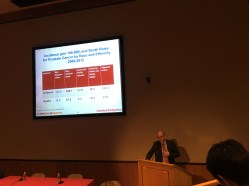
Some of the key topics from Dr. Nanus and Dr. Tagawa’s presentations included the common risk factors for prostate cancer, the importance of screening, the latest treatments and research, as well as utilizing the precision medicine approach.
Key highlights from their presentations are outlined below.
Prostate Cancer Risk Factors
Prostate cancer risk factors include age, ethnicity and inherited genetic conditions. For example, those diagnosed with prostate cancer are predominantly older men. Additionally, new data points towards a surprisingly high percentage with inherited cancer genes. Those with genetic conditions such as BRCA 1 or BRCA 2 or those with prostate cancer in their family history are also more likely to be diagnosed with the disease.
Early Detection and Screening
Dr. Nanus and Dr. Tagawa highlighted the importance of screening and early detection by referencing the recently-updated National Comprehensive Cancer Network (NCCN) prostate cancer screening guidelines. Despite ongoing debate over the value of prostate cancer screening, this past September, NCCN’s guidelines suggest that screening can indeed reduce a man’s risk of dying from the disease and that prostate-specific antigen (PSA) testing and digital rectal examination (DRE) should be done. Newer tests are also available to assist in counseling about biopsies and targeted biopsies are now offered at selected centers. Dr. Scott Tagawa addressed the importance of the “shared decision-making” model when it comes to prostate cancer screening. For example, men considering screening are encouraged to discuss with their healthcare team and family members the pros and cons of getting screened and what the best course of action would be if the results lead to a diagnosis.
Treatments
The presentation also addressed the different treatment approaches. As a first step, the most important factor in choosing the best way to treat prostate cancer is knowing what stage the cancer is in. Prostate cancer has been traditionally staged and “risk-stratified” based on the extent of the cancer (using T, N, and M categories) and the PSA level and Gleason score at the time of diagnosis.
We now have additional molecular tests to add prognostic value. In certain circumstances, these tests assist in the decision for “radical treatment” which has been traditionally performed with surgery and/or radiation versus active surveillance (which entails regular monitoring visits in addition to repeat imaging/biopsy). It is important to note that most men diagnosed with prostate cancer, including some that have recurrence after surgery or radiation, will never die of the disease.
Novel molecular imaging techniques have assisted in telling physicians and researchers about the location of previously unseen cancer and also providing information about the biology of certain tumors. A number of therapeutic advances have occurred over the last several years resulting in men with incurable cancer living longer with a better quality of life.
Precision Medicine
Dr. Tagawa emphasized the great strides and therapeutic advances over the years in prostate cancer treatments, but that more work still needs to be done. There are now many options for therapies that make men live longer while also making them feel better. One of the reasons for this advancement is the use of precision medicine, which means that physicians are treating each individual based on their own genetic makeup without using a “one size fits all” type of approach. A key factor in making this method successful is through clinical trials. We often interrogate a patient’s tumor from surgery or an image-guided needle biopsy. In addition, liquid biopsies are now increasingly valuable.
View this FOX 5 clip featuring Dr. David Nanus and Dr. Scott Tagawa with their patient, Alex Sarmiento, who was diagnosed with prostate cancer and tested with a liquid biopsy.
Research
Data shows that most adults with cancer do not participate in clinical trials. It is through clinical trials that new treatments and combinations of treatments can be identified. Clinical trials pave the way toward further scientific advances that could potentially help to find a cure for prostate cancer, and other cancers as well. These trials also have the ability to offer therapies to patients that they otherwise would not have access to. The most common reason that patients do not enroll in clinical trials is because they were not told that this was an option. We suggest asking your physician about access to clinical trials at each stage of the disease and/or seeking out centers that have trials available.
Weill Cornell Medicine and NewYork-Presbyterian offers many prostate cancer-specific trials that you can search for here.
 Nanus comments on The
  The
The  We’ve outlined some key highlights from the first day of the conference below.
 What's New in GU?