
Cancer cells produce substances that “thicken” the blood, so men and women with cancer have a significantly higher risk of developing blood clots. A manifestation of blood clots can be cardiovascular events such as heart attack and stroke. The latest research found that six months after diagnosis, people with cancer had a higher rate of heart attack or stroke.
New research from Weill Cornell Medicine (WCM), published in the Journal of the American College of Cardiology, found that patients newly diagnosed with cancer are more than twice as likely to suffer from arterial thromboembolism – a sudden interruption of blood flow to an organ or body part due to a clot that has come from another part of the body – as cancer-free patients. The types of cancers studied include breast, lung, prostate, colorectal, bladder, pancreatic and gastric cancer.
Dr. Babak B. Navi, neurologist at Weill Cornell Medicine, and his team evaluated the risk of heart attack and stroke in patients age 66 or older with new cancer diagnoses compared with people who did not have cancer. Results showed that six months after diagnosis, people with cancer had a higher rate of heart attack or stroke (4.7%) due to blood clots than people without cancer (2.2%). After the first six months, the differences in risk got smaller. One year after diagnosis, the risks were about the same in people with and without cancer. Dr. Babak Navi and his team also discovered that more advanced stages of cancer were associated with higher risk.
This research is an outgrowth of the data that Dr. Babak Navi presented at last year’s International Conference on Thrombosis and Hemostasis Issues in Cancer (ICTHIC) about the risk of heart attacks and stroke in women with breast cancer. Results showed that women diagnosed with breast cancer have a higher risk of a heart attack or stroke in the first year after diagnosis compared to similar women without breast cancer.
Through the latest research, we now know the risk of clotting goes beyond breast cancer and is a risk factor for many different forms of cancer. Further research is needed in order to develop optimal strategies to prevent arterial thromboembolism in patients with cancer.

“People with cancer are known to be at increased risk of blood clots and this risk is believed to vary according to cancer type, stage of disease, and treatment modality. We also know that patients with cancer are more likely to have cardiovascular events which may be induced by tumor or its treatment,” says Dr. Scott Tagawa, medical oncologist and Director of the Weill Cornell Medicine Genitourinary (GU) Oncology Program. “This research further underscores the need to conduct clinical trials to determine the best prevention methods and treatment of thrombosis in patients with cancer.”
Mark your calendars to learn more about the cancer clotting connection at this year’s World Thrombosis Day event.

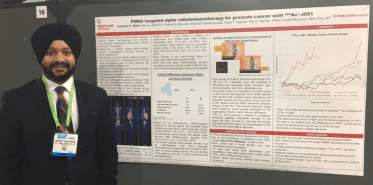
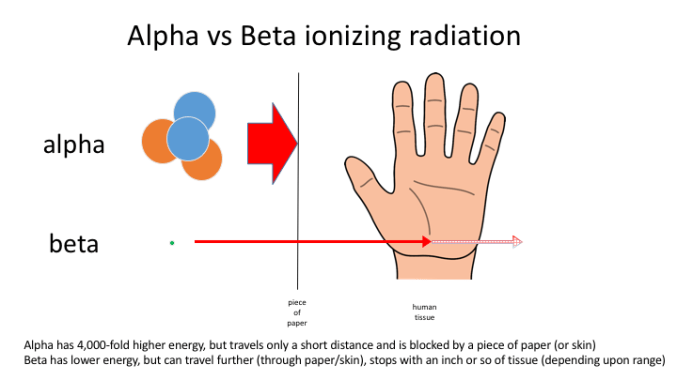 Alpha particles have the advantage of a very high amount of energy and a short path length. The amount of energy is high enough so that only a small number (1-10) of alpha particles lead to lethal damage to cells. An advantage of the short path length is that only the cells in close proximity to the alpha particle are destroyed, sparing other healthy and normal tissues. However, because of the short path length travelled, the alpha particle needs to be delivered into or right next to the tumor cell. In fact, even a piece of paper (or skin) is enough to block an alpha particle. Other alpha particles are being developed to be delivered as lethal payloads when attached to carrier molecules. One of these, actinium-225 (225Ac) is an alpha-emitting radionuclide that emits 4 alpha particles. In humans the 225Ac particle has been used as part of a compound linked to an antibody to treat leukemia and it also has been
  What's New in GU?