
Radiation is one of the most common treatments for prostate cancer. Using radiation, physicians are able to cure some men with cancer confined to the prostate, as well as improve symptoms for men with metastatic disease. There are many different types of radiation treatments.
One type of treatment includes injecting radioactive isotopes into the blood in order to directly reach the prostate cancer cells regardless of where they are located in the body, including the cells that have spread to the bone and other organs. For example, Radium-223 (Xofigo) is FDA-approved to treat prostate cancer that has metastasized to the bone and has been shown to improve both the quality and duration of the lives of men with advanced prostate cancer.
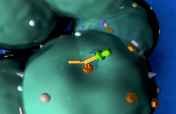
Radioimmunotherapy or radioligand therapy involves the practice of attaching a radioactive isotope to a cancer-targeting antibody or small molecule that binds only to a specific cancer-related molecule on a tumor cell. This is similar to a “lock and key” scenario, where the antibody or molecule resembles the key that will only recognize a very specific lock (the cancer-related molecule).
Essentially all prostate cancers have a specific “lock” called prostate-specific membrane antigen (PSMA). This “lock” is a protein that sits on the surface of most prostate cancer cells but is absent from most other normal places in the body.
Physicians and scientists have engineered very specific “keys” in the form of monoclonal antibodies and molecules that will bind only to PSMA. When we attach radioactive particles to these keys, we are able to deliver what we call “molecularly targeted” radiotherapy.
For example, J591 is a monoclonal antibody (an engineered protein) that recognizes PSMA. Actinium-225 (225Ac) is a small radioactive particle that emits alpha-particles, a powerful form of radiation requiring fewer particles to cause damage to the cancer cells. When these are attached to one another, we call the compound 225Ac-J591 (a radioactive particle linked with a monoclonal antibody). It is designed so that J591 will recognize the PSMA on the prostate cancer cells and bring the radioactive particle 225Ac with it into prostate cancer cells wherever it goes in the body.
Our physicians and scientists are building on prior laboratory-based research presented at the 2017 Meeting for the Annual Association for Cancer Research (AACR) and are now studying the role this experimental therapy may have for men with advanced prostate cancer that has spread throughout the body. Thanks to generous support from the Prostate Cancer Foundation and the NIH SPORE award, Dr. Scott Tagawa, medical oncologist and Director of the Weill Cornell Medicine Genitourinary (GU) Oncology Program, and his team are conducting the first-ever clinical trial testing the PSMA-targeted antibody and radioactive alpha particles (225Ac-J591) for treatment of advanced prostate cancer. This promising new and unique approach has the potential to lead to another treatment option for those patients who are not experiencing the best clinical outcomes possible from standard of care therapies. Some men in Germany have received 225Ac linked to PSMA-617 with a handful of cases published with impressive responses. However, no formal studies have been performed and there are reports of bothersome dry mouth (xerostomia) and the potential for delayed kidney damage (seen in mice).
“We look forward to advancing science and also making this treatment available to men with advanced prostate cancer in the near future, says Dr. Scott Tagawa. “Our goal is to translate the existing knowledge base into true clinical gains for prostate cancer patients and it’s great that in October, 2017, we are able to treat our first patient.”
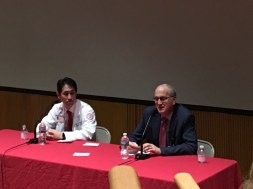 Last week, Dr. David Nanus, professor of medicine and urology at Weill Cornell Medicine and Dr. Scott Tagawa, medical oncologist and Director of the Weill Cornell Medicine Genitourinary (GU) Oncology Program, presented to and educated people in the local community about prostate cancer. Their presentation was titled, “Your Guide to Prostate Health and What to Know About the Leading Cancer in Men.” Following the presentation, all attendees were invited to ask the physicians questions.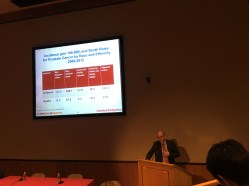
 indeed reduce a man’s risk of dying from the disease and that prostate-specific antigen (PSA) testing and digital rectal examination (DRE) should be done. Newer tests are also available to assist in counseling about biopsies and targeted biopsies are now offered at selected centers. Dr. Scott Tagawa addressed the importance of the “shared decision-making” model when it comes to prostate cancer screening. For example, men considering screening are encouraged to discuss with their healthcare team and family members the pros and cons of getting screened and what the best course of action would be if the results lead to a diagnosis.
 Nanus comments on The
  What's New in GU?