Controlling Hot Flashes Related to Hormonal Therapy and Prostate Cancer

Androgen Deprivation Therapy (ADT), or hormonal therapy, is widely used in the treatment of metastatic and locally advanced prostate cancer, as most prostate cancer cells rely on testosterone to grow. Suppressing the testosterone hormone can cut off a fuel source for the prostate cancer. While ADT is a highly effective treatment and can be administered before, after or during radiation therapy, it is not without side effects. Some of the most common side effects of ADT are hot flashes and night sweats. Almost 80% of patients with prostate cancer experience hot flashes during or after treatment with ADT.

Hot flashes are sudden sensations of warmth, typically in the upper body in the face, neck, and chest areas. This sensation is often accompanied by sweating and flushing. Hot flashes can last seconds or as long as 20 minutes. They can also be associated with sleep disturbance, depressed mood, anxiety, and cognitive impairment. Hot flashes combined with sweating while sleeping are called night sweats. Night sweats because of ADT should not require patients to change their sheets daily due to drenching. Drenching is unlikely a side effect of ADT and should be discussed with care team members as this may signal that something else is going on.  Experiencing hot flashes and night sweats can decrease quality of life in men with prostate cancer and can lead to premature discontinuation of treatment, even if the therapy is working to keep the cancer at bay.

There are pharmaceutical and non-pharmaceutical interventions available to control hot flash symptoms and reduce the frequency of the sensations. These interventions include physical activities, behavioral therapies, device-based and pharmacologic (drug) interventions, as well as natural health products. It should be noted that some interventions, such as venlafaxine, which are a mainstay for treatment of hot flashes in women with postmenopausal hot flashes or hot flashes associated with breast cancer treatment have been proven to be ineffective for patients with prostate cancer. Some lifestyle and behavioral modifications that can help reduce the impact of hot flashes include avoiding caffeine, alcohol, and tobacco, as well as increasing exercise and physical activity.

In addition, the below methods for managing hot flashes were recently presented as part of new research shared at the American Society of Clinical Oncology (ASCO) annual meeting in June 2024.

  • MANCAN2: Results from this multicenter clinical trial evaluating cognitive behavioral therapy (CBT) to help patients with prostate cancer who are receiving ADT to manage hot flash and night sweat symptoms showed that a 4-week CBT program during ADT treatment reduced the impact of hot flashes and night sweats and resulting anxiety and depression for six weeks. The improvement, however, was not seen when looking further out to the 6-month mark. This study warrants further research to investigate the role of CBT in managing hot flashes and whether this benefit can be prolonged.
  • Alliance A222001: This randomized clinical trial evaluated the efficacy of Oxybutynin, a drug that blocks the action of the neurotransmitter acetylcholine, to improve hot flashes. Study authors concluded that twice-daily oxybutynin improved hot flash symptoms and reduced the frequency of hot flashes altogether compared to a placebo at the primary endpoint of 6 weeks. Oxybutynin, which was initially developed to treat urinary incontinence, did not have many severe side effects reported in the study. Since the drug has been used by many for urinary reasons, it is known that a common side effect is dry mouth, which occurred to a significant (moderately severe) degree in about 9% of patients taking oxybutynin and 8% of patients taking placebo. This drug is not FDA approved for the treatment of hot flashes.

Hot flashes were discussed widely at this year’s ASCO meeting, including in a session called, “Living Your Best Life on Treatment.” This important topic underscores the need to continue to discuss and develop interventions with the potential to improve quality of life for patients undergoing prostate cancer treatment. It is ultimately through new research and updated information that clinicians and patients with prostate cancer can work together to better manage, reduce or eliminate hot flashes.

2023 American Society of Clinical Oncology Genitourinary Cancers Symposium (ASCO GU)

The 2023 American Society of Clinical Oncology Genitourinary Cancers Symposium (ASCO GU) brought together members of the cancer care and research community to share new, innovative findings in the study, diagnosis, and treatment of GU malignancies. This year, ASCO GU was held in a hybrid format, taking place live in San Francisco from February 16-18, as well as virtually online.

A number of members of the Weill Cornell Medicine (WCM) Genitourinary (GU) Oncology Program presented or were involved with new research findings shared at the conference, as well as trial-in-progress updates for some of the clinical trials currently underway and open to accrual at Weill Cornell Medicine and NewYork-Presbyterian Hospital (NYP).

Our team’s contributions included both scientific and treatment advancements that are leading the way for more targeted therapies and improved outcomes for patients, as well as current trial-in-progress updates on ongoing studies.

Some of our the highlights include Dr. Scott Tagawa presenting on a combination treatment of PSMA-targeted therapy and hormonal therapy for certain patients with prostate cancer, Dr. Jones Nauseef presenting details on two different Weill Cornell Medicine studies involving an investigational therapy for metastatic castration-resistant prostate cancer and a collaboration genomic alterations project, and Dr. Cora Sternberg’s involvement with two clinical trials for prostate cancer and bladder cancer which had follow up results presented.

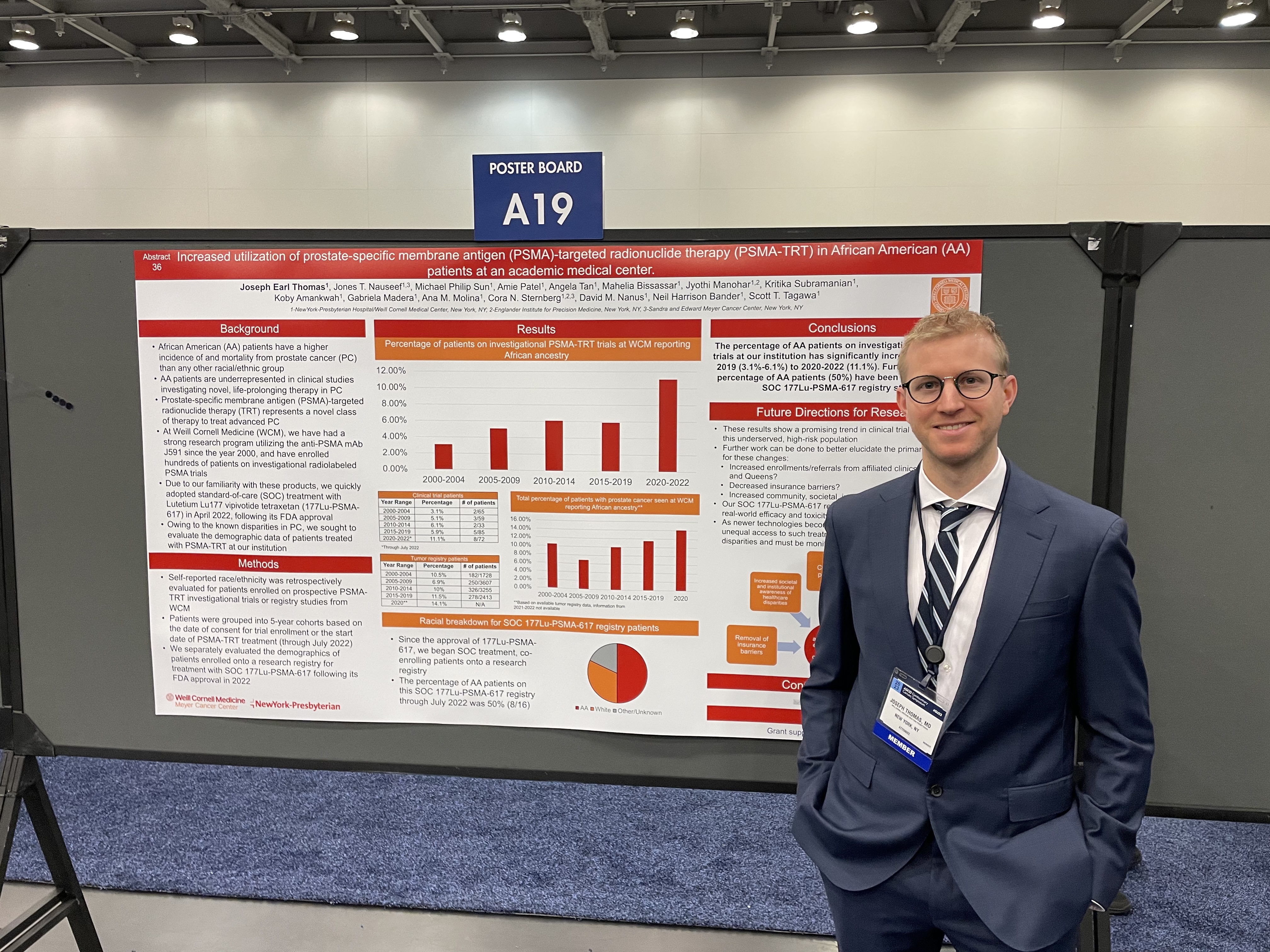
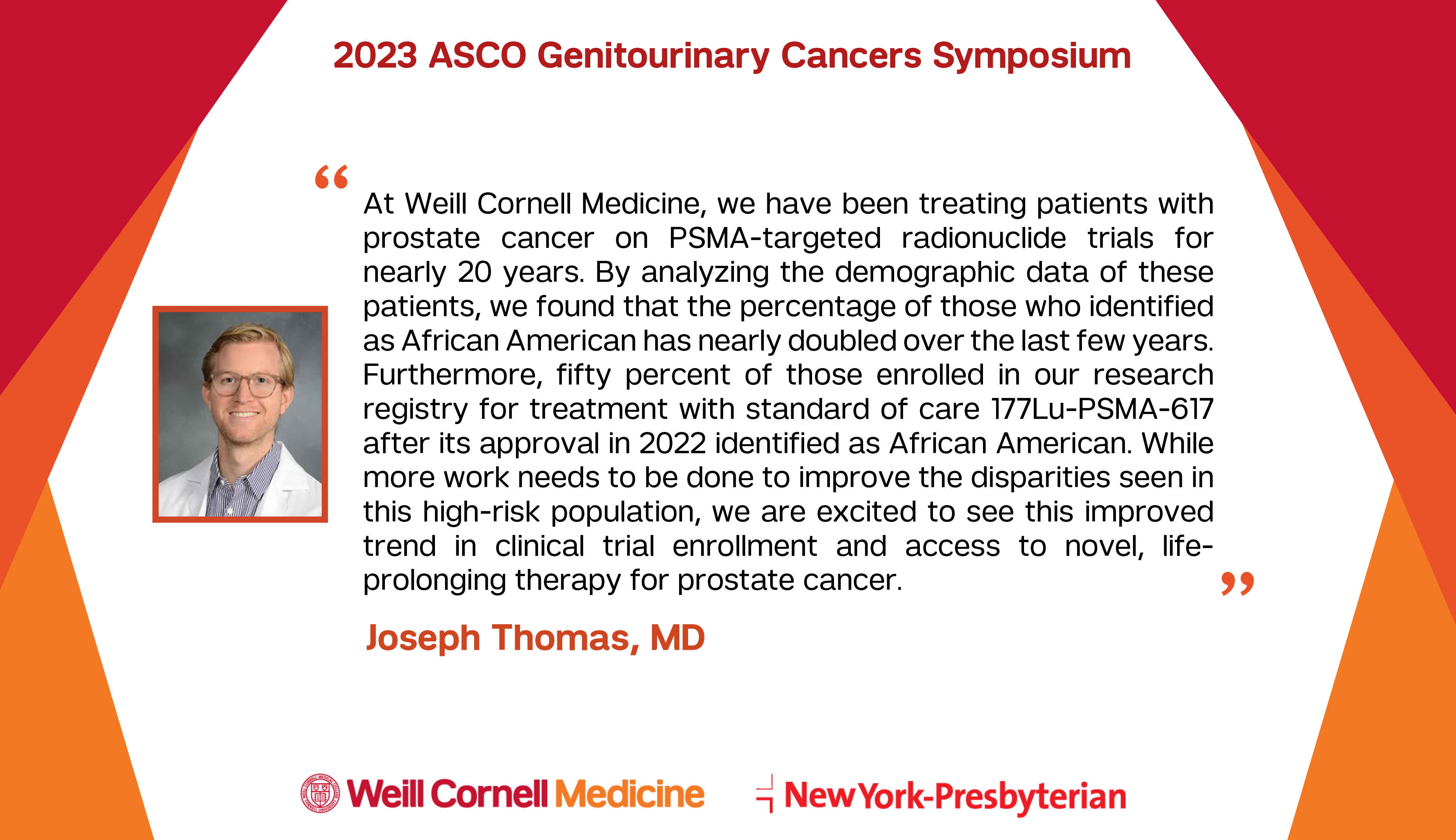
Two of our Hematology & Oncology Fellows also presented research updates from Weill Cornell Medicine studies. Dr. Joseph Thomas shared insights from demographic patient data for those treated on prostate-specific membrane antigen (PSMA)-targeted radionuclide clinical trials and Dr. Michael Sun presented on an investigational treatment combination for metastatic prostate cancer.

Additionally, Dr. David Nanus served on an expert panel for a session on clinical decision-making for prostate cancer, “Novel Guidelines for PSMA PET Staging of Disease: When to Follow and When to Not.”

Read more specifics below on our various team members’ involvement and research from the conference.

Prostate Cancer

Dr. Scott Tagawa presented exciting new research from Weill Cornell Medicine/NewYork-Presbyterian Hospital showing that a unique combination of PSMA-targeted therapy and hormonal therapy delayed metastases in a subset of patients with prostate cancer. 

A phase I/II clinical trial evaluating the investigational therapy 225Ac-J591 is underway at Weill Cornell Medicine for metastatic castration-resistant prostate cancer. Dr. Jones Nauseef explains the study aims which were presented as part of a trial-in-progress update: https://bit.ly/3XwUE02. This trial, which enrolls patients whether or not they have previously received 177Lu-PSMA, is ongoing.

Results from a phase 3 clinical trial showed improved overall survival in metastatic hormone-sensitive prostate cancer patients receiving darolutamide, androgen-deprivation therapy (ADT) and chemotherapy. Dr. Cora Sternberg shared takeaways from this research which led to the United States Food and Drug Administration (FDA) approval of this combination in August 2022: https://bit.ly/3xkfQeO

Dr. Timothy McClure explains a focal therapy prostate cancer treatment that is being evaluated in a clinical trial at Weill Cornell Medicine in combination with lower-dose radiotherapy: https://bit.ly/3E38YXi

Weill Cornell Medicine Hematology & Oncology Fellow Dr. Joseph Thomas shared details from a research registry analyzing demographic patient data for those treated on prostate-specific membrane antigen (PSMA)-targeted radionuclide clinical trials: https://bit.ly/3xsFVbD

Dr. Himanshu Nagar shared information about an ongoing phase 2 clinical trial comparing 4 weeks to 2 weeks of MRI-guided radiotherapy after prostate cancer surgery: https://bit.ly/3HZk14W. The SHORTER trial is currently open to enrollment at Weill Cornell Medicine/NewYork-Presbyterian Hospital.

Weill Cornell Medicine Hematology & Oncology Fellow Dr. Michael Sun shared preliminary results from Weill Cornell Medicine research evaluating a treatment combination of immunotherapy, anti-androgen medication, and PSMA-targeted radionuclide therapy for men with metastatic prostate cancer: https://bit.ly/3YKBxk4. This trial has entered a randomized phase and is enrolling patients.  

Dr. Ariel Marciscano breaks down Weill Cornell Medicine research studying irradiated prostate cancer tumors in an effort to analyze and understand the changes in the tumor and microenvironment after radiation treatment: https://bit.ly/40YDVWu https://bit.ly/3I0CBtj

Members of the Weill Cornell Medicine Englander Institute for Precision Medicine collaborated with the New York Genome Institute and genomic company Isabl to identify both known and unexpected genomic alterations in prostate cancer patients. Dr. Jones Nauseef shares insights: https://bit.ly/3xk21NC

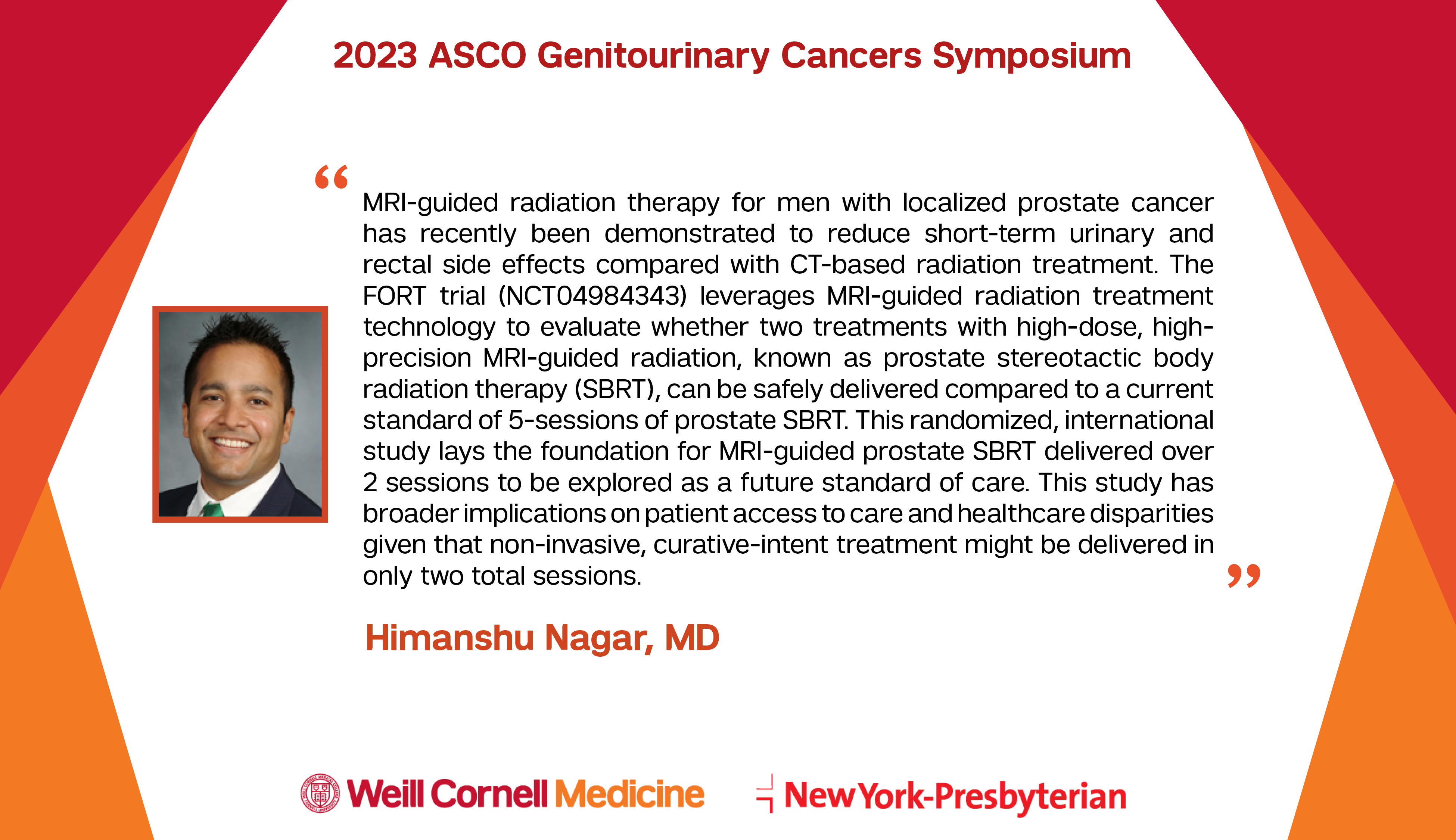
A Weill Cornell clinical trial led by Dr. Himanshu Nagar was presented comparing two stereotactic body radiation therapy (SBRT) sessions to five SBRT sessions for prostate cancer: https://bit.ly/3E6erMS.

Weill Cornell Medicine Urology resident Dr. Alec Zhu discusses new Weill Cornell Medicine research he presented comparing cryoablation treatment outcomes between men with MRI-visible and MRI-invisible prostate cancer. https://bit.ly/3YQPcpG

Bladder Cancer

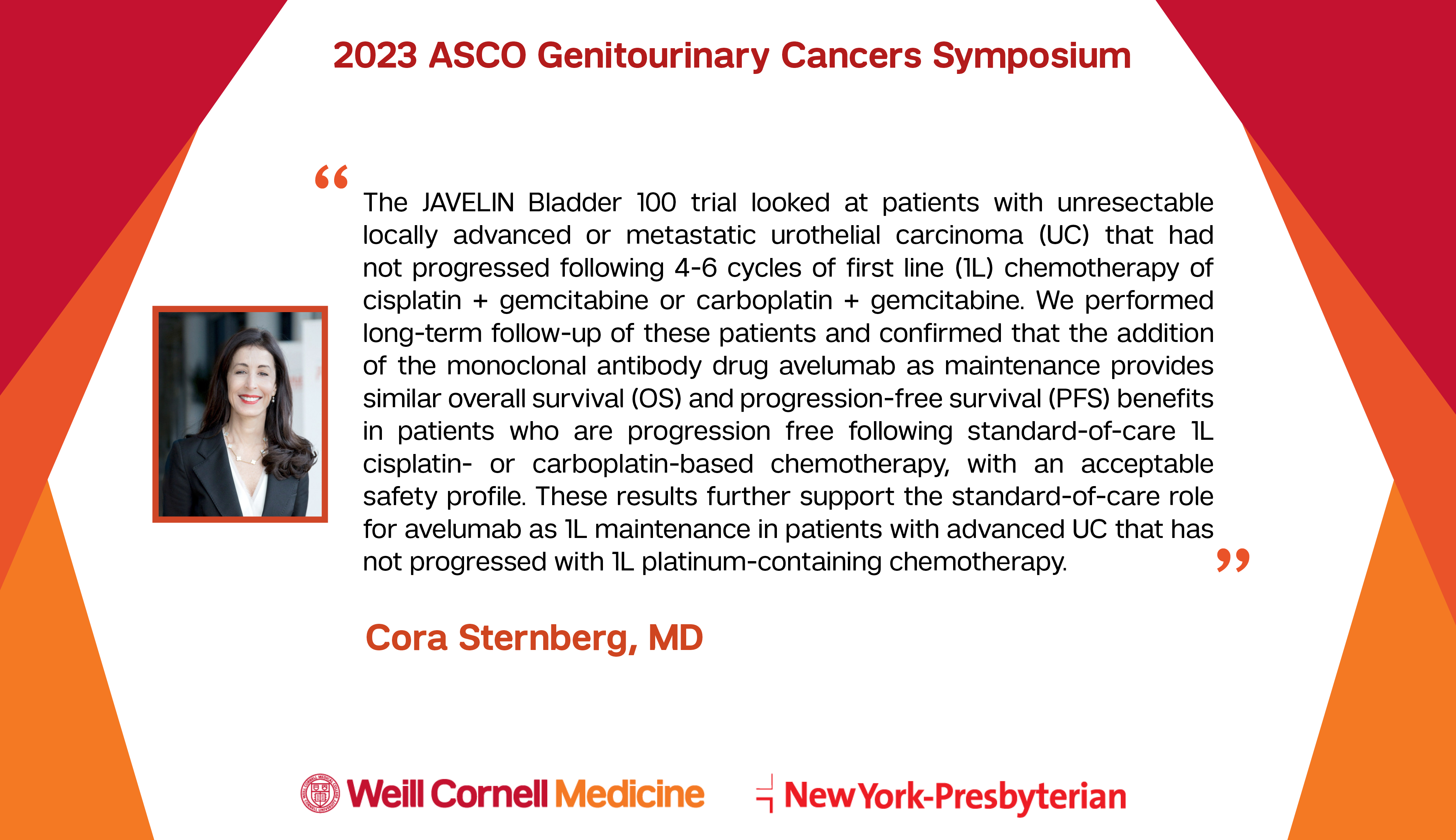
Dr. Cora Sternberg breaks down long-term follow-up results on a clinical trial evaluating avelumab as maintenance therapy for bladder cancer: https://bit.ly/3XvsyC8

Dr. Himanshu Nagar shares more about a clinical trial comparing immunotherapy alone to immunotherapy plus radiation therapy for bladder cancer. https://bit.ly/3E38YXi. This trial is open across the country, with patients receiving pembrolizumab with or without radiation.

Additionally, updates to three cohorts of the TROPHY-U-01 study evaluating the antibody-drug conjugate sacituzumab govitecan were presented by a team of authors including Drs. Tagawa and Sternberg at Weill Cornell Medicine. Cohort 1 of the study enrolled patients with progressive advanced urothelial carcinoma (UC) despite platinum chemotherapy and immune checkpoint inhibitors. Initial results led to an accelerated approval by the U.S. Food and Drug Administration (FDA). In an update presented at GU ASCO 2023, the research demonstrated that efficacy was maintained and no new toxicity signals emerged despite longer follow up. In Cohort 2, patients with advanced UC who were not candidates for cisplatin or carboplatin chemotherapy following immune checkpoint inhibitors received sacituzumab govitecan which demonstrated a 32% objective response rate. Cohort 3 enrolled patients with advanced UC following platinum chemotherapy, treating them with sacituzumab govitecan and pembrolizumab, leading to a 41% overall response rate. Ongoing enrollment is testing this drug in earlier lines of therapy with different combinations. Dr. Scott Tagawa spoke about the TROPHY-U-01 study, as well as other noteworthy studies from the conference, on VJ Oncology’s GU Cancer Sessions podcast. Listen here.

The Weill Cornell Medicine GU Oncology Program is dedicated to advancing genitourinary cancer research, improving clinical outcomes, and enhancing the quality of life for all those affected by these diseases. Our team of physicians and scientists continue to conduct research throughout the year aimed at enhancing the treatment possibilities and understanding of how we can best manage and tackle GU cancers.

Bladder Cancer Treatment Options

The bladder is an organ in the lower pelvis responsible for storing urine. When cells in the bladder start to grow out of control, they can form tumors leading to bladder cancer.

Urothelial cancer is the most common form of bladder cancer and impacts around 80,000 people per year. This form of bladder cancer starts in the urothelial cells that line the inside of the bladder. Urothelial cancer may also occur in other areas of the urinary lining such as the inside of the kidneys (renal pelvis) and the tubes connecting the kidneys to the bladder (ureters)

The Weill Cornell Medicine Genitourinary (GU) Oncology Program works with a wide range of GU specialists to tailor treatments for each patient depending on their disease type and if they have metastatic disease, which is when the cancer has left the bladder or other areas of the urinary system and spread to other parts of the body through the lymph nodes or bloodstream.

Here are some of the treatment options offered for bladder cancer patients.

Chemotherapy

Chemotherapy is a common treatment option for patients with bladder cancer and can be given at a number of times throughout the treatment process. Chemotherapy may be given directly into the bladder or into veins before surgery to make a tumor easier to remove, after surgery or radiation to kill remaining cancer cells, or as a main treatment option for patients with metastatic disease.

Radiation Therapy

Another type of treatment used for bladder cancer is radiation. Radiation may also be given throughout the treatment process. It can be used after surgery, as a main treatment for earlier-stage cancers that may not require or be able to receive surgery or chemotherapy, or as part of a treatment regimen for advanced or metastatic disease. Radiation is often given along with chemotherapy to help the radiation work better, which is known as chemoradiation.

Stereotactic body radiation therapy (SBRT) is a type of radiation therapy that uses x-rays to kill tumor cells. This method is able to deliver radiation precisely to the tumors and may kill tumor cells with fewer doses over a shorter period compared to other types of radiation.

Immunotherapy

Immunotherapy drugs help the body’s immune system fight cancer by instructing the immune system to identify and destroy cancer cells.

There are a number of approved immunotherapy options that may be given to patients in a variety of different circumstances. Immunotherapy can be used in patients with non-muscle invasive bladder cancer though instillation in the bladder, into veins as an additional therapy after surgery, or into veins for advanced cancer.

One of the most common versions of immunotherapy are drugs called immune checkpoint inhibitors. Immune checkpoints are part of the natural body to keep the immune system from attacking normal cells (when this happens, we call it “autoimmunity”). Checkpoint inhibitors target “checkpoints”, or proteins on the immune cells, that cancer cells use to hide from the immune system. These drugs block the checkpoints allowing the body’s immune system to attack the cancer.

Surgery

Surgery is often done before or after other treatments in order to best maximize the results. A number of surgical techniques and options exist depending on the type of bladder cancer and whether or not it has spread beyond the urinary system. These range from endoscopic techniques where a tube is inserted into the urinary system to using cameras (often with the assistance of a robot) to open surgery with incisions through the skin. Sometimes the bladder needs to be removed and there are a number of techniques to either divert urine to the skin (often with a bag) or creation of a new bladder (called neobladder).

Clinical Trials

The Weill Cornell Medicine Genitourinary (GU) Oncology Program leads and participates in a number of clinical trials across a spectrum of disease areas, including bladder cancer. Our team is dedicated to evaluating new diagnostic and treatment approaches in order to develop the best options that benefit our patients. Clinical trials may be the right choice for some patients, and we encourage you to speak to your doctor about the options available to you.

Our team is currently leading a clinical trial evaluating the effects of adding radiation therapy to the immunotherapy drug atezolizumab, for the treatment of metastatic bladder cancer. The aim of this trial is to identify if the combination of radiation and immunotherapy may have the ability to boost the results of the immunotherapy drugs and may be more effective at killing tumor cells. Learn more about this trial here.

Another interesting trial has been developed based upon the laboratory work of one of our team members. For patients with bladder cancer invading the muscle layer and needing removal of the bladder (called cystectomy), the usual approach is chemotherapy followed by surgery. However, not all patients are able to safely receive the most effective chemotherapy drug called cisplatin. This trial is evaluating the use of an oral targeted drug called abemaciclib to take prior to surgery for these patients. Learn more about this trial here.

Antibody-drug conjugates are a type of targeted chemotherapy. To date, two have been approved by the U.S. Food and Drug Administration (FDA) in various situations. We currently have trials open to enrollment testing two of these antibody-drug conjugates, enfortumab and IMMU-132, either alone or in combination with other drugs.

Our team is continuously working on new research initiatives and clinical trial participation. You can find a full list of our open bladder cancer trials here.