
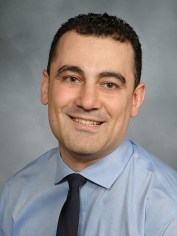
Meet the Newest Member of Our Team: Dr. Bishoy Faltas

Bishoy_Faltas_HeadshotWe’re pleased to announce that the Genitourinary (GU) Oncology Program is expanding! Dr. Bishoy Faltas joined us on July 1st as an Instructor in Medicine and as an Assistant Attending Physician. He will see patients with bladder, prostate, testicular, and kidney cancers.

Dr. Faltas may already be a familiar face and name because he completed his Hematology and Medical Oncology Fellowship here at Weill Cornell Medicine and NewYork-Presbyterian Hospital in 2015. Additionally, he recently finished a one-year research fellowship in the laboratory of Dr. Mark A. Rubin and the Institute for Precision Medicine.

As part of the Genitourinary Oncology Program, Dr. Faltas will focus his research on urothelial carcinoma, the most common type of bladder cancer, and specifically on genetic mutations and drug-resistance. He has presented groundbreaking work on genomic alterations before and after chemotherapy and the potential clinical implications. He will also be building upon his prior research examining how patients with bladder cancer respond to immunotherapies.

He has already received numerous research awards for his work, is a member of the Bladder Cancer Advocacy Network, and we are very excited to officially welcome Dr. Faltas to the GU team!
“Moonshots” and More: How We’re Developing Personal Cancer “Cures” through Precision Medicine

In President Barack Obama’s final State of the Union address, he emphasized the “moonshot” need to cure cancer. At Weill Cornell Medicine and NewYork-Presbyterian Hospital, we are actively working towards that goal.

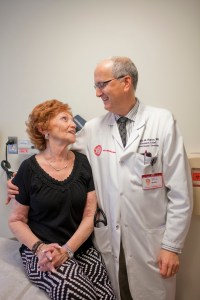
420_Dr. David Nanus with patient Irene Price 8 x 12
Irene Price and Dr. David Nanus, Chief, Hematology and Medical Oncology at Weill Cornell Medicine

Through our use of gene sequencing and precision medicine, we are transforming the way cancer is characterized and treated. Using a multidisciplinary approach and the EXaCT-1 test, here at the Weill Cornell Genitourinary (GU) Oncology Program, we are able to sequence the genes of advanced stage cancer patients. We can then narrowly tailor personalized treatment regimens based on the genetic makeup of a patient’s tumor which indicates whether a cancer is likely to respond to a particular treatment therapy.

Irene Price came to Dr. David Nanus, Chief of the Division of Hematology and Medical Oncology, with metastatic bladder cancer, and had more than 20,000 genes sequenced with the EXaCT-1 test. Dr. Nanus and his colleagues determined that the reason she wasn’t responding to prior treatment rested in a specific genetic mutation within her tumor. As a result, the team was able to prescribe a personalized treatment regimen – one more often used in the treatment of breast cancer.

The results were life changing. It caused her cancer to completely disappear. According to Price, “I’ve had college graduations that I wouldn’t have had, weddings that I wouldn’t have had, and the birth of great grandchildren that I wouldn’t have had.”

Learn more about our personalized approach to cancer care in a two-part series on NY1:

Part 1: “Gene Sequencing Effort Helps Pinpoint Cancer Treatments”

Part 2: “Tailored Cancer Treatments Fit Doctors’ New Approach”


To make an appointment with one of our clinicians, please call 646-962-2072.