We’re pleased to announce that the Genitourinary (GU) Oncology Program is expanding! Dr. Bishoy Faltas joined us on July 1st as an Instructor in Medicine and as an Assistant Attending Physician. He will see patients with bladder, prostate, testicular, and kidney cancers.
Dr. Faltas may already be a familiar face and name because he completed his Hematology and Medical Oncology Fellowship here at Weill Cornell Medicine and NewYork-Presbyterian Hospital in 2015. Additionally, he recently finished a one-year research fellowship in the laboratory of Dr. Mark A. Rubin and the Institute for Precision Medicine.
As part of the Genitourinary Oncology Program, Dr. Faltas will focus his research on urothelial carcinoma, the most common type of bladder cancer, and specifically on genetic mutations and drug-resistance. He has presented groundbreaking work on genomic alterations before and after chemotherapy and the potential clinical implications. He will also be building upon his prior research examining how patients with bladder cancer respond to immunotherapies.
He has already received numerous research awards for his work, is a member of the Bladder Cancer Advocacy Network, and we are very excited to officially welcome Dr. Faltas to the GU team!
Last weekend, Dr. Himisha Beltran traveled to Washington, D.C. to speak at the “Best of ASCO” meeting. She hosted the session on prostate cancer and summarized some of the most important studies presented at the 2016 American Society of Clinical Oncology (ASCO) meeting in Chicago.
She also represented Weill Cornell Medicine and NewYork-Presbyterian on a panel of the nation’s leading experts. The panel answered questions regarding some of the most challenging cases in genitourinary (GU) cancer care.
What’s new in research and treatment?
For men with advanced (metastatic) prostate cancer, the class of chemotherapy that has consistently proven to improve survival is called “taxanes.”
There are two taxanes that have been FDA-approved to treat prostate cancer, docetaxel (brand name: Taxotere) and cabazitazel (brand name: Jevtana). While these drugs are similar, men whose tumors have grown despite taking one drug often respond to the other.
Much of the important research at this year’s ASCO meeting focused on some key questions related to these two treatment options:
1. What treatment dose is best to maximize response, but minimize side effects?
2. Does the order in which patients receive these treatments matter?
3. When should oncologists switch between treatments if one is not working?
4. What is the impact on quality of life?
Another hot topic was the value and cost of treatments, and the link between treatment cost and access to care, since there can be financial barriers associated with certain treatments.
Below, we’ve outlined some of the key studies and clinical takeaways for prostate cancer treatment that Dr. Beltran discussed at the Best of ASCO meeting:
Chemotherapy Updates
For patients with metastatic castration-resistant prostate cancer (cancer that grows despite initial hormonal therapy), we learned that a newer drug (cabazitaxel) was not better compared to the old standard (docetaxel) for men who had not previously received chemo. In addition, a slightly lower dose of cabazitaxel for men that had previously received docetaxel was just as good in controlling the cancer with fewer side effects. Combined, these studies point towards less toxicity for individual patients, a cost-savings for the healthcare system, and potentially a lower financial burden on patients. A smaller study pointed towards increased responses by switching between these two drugs at an early time point if PSA was not decreasing optimally, and demonstrated that a circulating biomarker (blood test) provides an opportunity for scientists to analyze the mechanism of action of chemotherapy and assess response or resistance to treatment.
For patients with untreated metastatic prostate cancer, large studies have recently demonstrated the improved survival impact of using a combined treatment of both chemotherapy and hormonal therapy as opposed to only hormonal therapy for men with metastatic prostate cancer. A new research study examined the CHAARTED study data and evaluated the quality of life (QOL) of patients treated on the study. This research found that while the QOL was initially worse (at 3 months), there was no long-term negative impact, and QOL was better at 12 months for chemo patients relative to those who only received hormonal therapy. This has important implications for counseling patients, as some are worried about side effects. It is comforting to know that while side effects may occur, they are temporary and the longer-term benefit of cancer control leads to improved QOL in the longer term.
Radiation Updates
A randomized trial examined radiation therapy for treating localized prostate cancer that had not spread beyond the prostate gland in men with intermediate risk disease. This study compared the standard eight-week course of treatment with a shorter course of four weeks, called hypofractionation. The shorter course of treatment did not see any reduction in treatment response and did not increase toxicity. The results from this study in combination with two other similar studies (RTOG 0415 and ChIPP) support using hypofractionation as a new standard for men with intermediate risk prostate cancer, as it is more convenient since it requires fewer visits to complete and is potentially less costly for patients.
Genomic Updates
In a large multi-institutional study of nearly 700 patients (including Weill Cornell), over 11% of patients with metastatic prostate cancer had inherited mutations in DNA repair genes (such as BRCA2 or ATM). This has important family risk and treatment implications since these genes can be passed down through the family tree and are not only linked with prostate cancer, but other cancer risk, as well. This is practice changing and supports genetic counseling and testing for all men with metastatic prostate cancer. In addition, research is ongoing to utilize drugs that may work especially well in this situation.
Dr. David Nanus, Chief of Hematology and Medical Oncology at Weill Cornell Medicine and NewYork-Prebysterian Hospital and genitourinary (GU) cancer expert, sat down with OncLive TV to discuss future research efforts and next steps for a new immunotherapy drug for patients with bladder cancer. This drug, atezolizumab (brand name Tecentriq), is the first new drug that has been FDA-approved for urothelial carcinoma – the most common type of bladder cancer – in over two decades.
Atezolizumab works by detecting a specific protein (PD-L1) on the surface of tumor cells, allowing the body’s immune system to recognize the cancer and attack it. Ongoing research on this treatment has revealed some complexities that have left physicians and researchers with questions ripe for scientific exploration, especially since this is a newer drug lacking long-term clinical data.
Two important questions remain regarding atezolizumab:
1. Are there biomarkers we can use for this drug?
2. For how long should this drug be administered?
The first question involves “biomarkers” or “biological markers,” indicators in the body that can be measured or tracked. In cancer treatment, oncologists use different biomarkers to glean information about a patient’s diagnosis and prognosis, as well as to monitor treatment effectiveness. Biomarkers can also offer information about safety of a treatment and signal which patients will benefit most from a certain drug. Currently, we do not yet have any biomarkers to predict whether atezolizumab will work. In a recent interview with OncLive TV, Dr. Nanus explains this uncertainty by saying, “There is not going to be one simple biomarker that is going to say to treat or not treat, so that is the unanswered question.”
The second question pertains to duration of treatment. Researchers and physicians are still working to find out when atezolizumab can be safely stopped without losing its benefit, and if the drug can be re-administered in the case of cancer recurrence or relapse. The “right” length of treatment is also linked with cost-effectiveness and accessibility for all patients in need since this drug is very expensive.
These questions are global issues that pertain to many new and emerging cancer treatments, especially immunotherapies that leverage the body’s own immune system to fight the tumors. Immunotherapies are drastically changing the way many cancers are treated, but we still have much more to learn. It is only with time and additional research that we will find the answers to both of these questions.

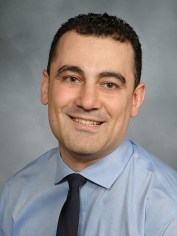 We’re pleased to announce that the Genitourinary (GU) Oncology Program is expanding! Dr. Bishoy Faltas joined us on July 1st as an Instructor in Medicine and as an Assistant Attending Physician. He will see patients with bladder, prostate, testicular, and kidney cancers.
 Last weekend, Dr. Himisha Beltran traveled to Washington, D.C. to speak at the “Best of ASCO” meeting. She hosted the session on prostate cancer and summarized some of the most important studies presented at the
  What's New in GU?