
By Shayne Robinson, RD, CSO, CDN and Jackie Topol, MS, RD, CSO, CDN
 We know that there is a great deal of conflicting information about nutrition that patients may receive from various sources. As Registered Dietitians who are board certified in oncology nutrition, we are here to clear up some of the confusion. Here are some of the most common nutrition myths we hear from patients:
Myth # 1 – Sugar feeds cancer.
Within the body, all carbohydrates break down to sugar which both healthy and cancer cells use for fuel. Research shows that the body responds to a high sugar intake by making more insulin and related growth factors, which influence cancer cell growth. However insulin levels also depend on genetic factors, physical activity, BMI (body mass index), metabolic syndrome (a group of medical conditions linked to insulin resistance) and the type of sugar you eat. Therefore just avoiding sugar is not the right plan for everybody. It’s important to maintain healthy blood sugar and insulin levels during cancer treatment and in general. In prostate cancer, hormonal therapy is associated with weight gain and the way the body processes sugar, so it’s important to be mindful of this when making dietary choices. Ongoing research is looking to target some of these pathways.
The key question to ask is “How much and what type of carbohydrates should I eat?” A Registered Dietitian who is specially certified in oncology nutrition (RD, CSO) can help you design a well-balanced eating plan that best fits your needs.
Reference: https://www.oncologynutrition.org/erfc/healthy-nutrition-now/sugar-and-cancer/
Myth #2 – I need to avoid raw fruits and vegetables.
Raw fruits and vegetables that have been washed can be eaten while you are receiving chemotherapy and/or radiation. If you have a very low neutrophil count (known as “neutropenia”) or a recent bone marrow transplant, your doctor or dietitian may recommend a low microbial diet. On the low microbial diet, you can eat most raw vegetables and most raw fruits that have a smooth skin or a thick peel. The fruits and vegetables we advise not consuming on the low microbial diet are the ones you cannot wash thoroughly or those that may have mold such as raw mushrooms, sprouts, strawberries, blueberries, raspberries, grapes, peaches, and plums. In the current era of treatment for genitourinary cancers, most targeted therapies do not suppress the immune system or require a low microbial diet. Not all cancer patients will have to follow these guidelines since they are specifically for leukemia and bone marrow transplant patients. If you are not sure whether you should be following a low microbial diet or how long you should follow it for, we encourage you to speak to your doctor or dietitian. Additionally, there are certain oral treatments for kidney cancer that are linked with gastrointestinal side effects such as diarrhea. There are ways to include fruits and vegetables in the diet while taking these factors into account. There are many health benefits that go hand-in-hand with eating fruits and vegetables, so make sure to include them in your diet! If you are concerned that you may not be meeting your nutritional needs, you can make an appointment with one of our dietitians who can help.
Reference: https://www.foodsafety.gov/risk/cancer/index.html and NewYork-Presbyterian’s “Guidelines for the Low Microbial Diet”
Myth # 3 – Certain foods will increase my white blood cell count.
Chemotherapy drugs, radiation therapy, and cancers of the blood and bone marrow can damage bone marrow and lower white blood cell counts. These cells recover with time. Blood counts are low because the bone marrow isn’t working properly, not because the body lacks the nutrients to make blood cells.
No specific foods or nutrients increase production of white blood cells, but if you have low blood counts it is very important that you eat well because a well-nourished person recovers quicker from treatment than a malnourished person. Specific foods or nutrients won’t speed up the recovery of your bone marrow, but you do want to eat well so that when your bone marrow recovers all the nutrients that are the building blocks for cells are available for your body to make the white blood cells. A Registered Dietitian specially certified in oncology nutrition (RD CSO) can help you ensure you are eating well and in turn optimize your white blood counts.
Reference: http://www.oncologynutrition.org/erfc/eating-well-when-unwell/white-blood-count-diet/
Myth # 4 – Cancer survivors must eat only organic produce.
Organically grown produce have lower pesticide residues and synthetic (man-made) food additives, but following an organic diet does not guarantee a healthy diet. In fact, avoiding conventionally grown produce may eliminate some healthy food options. In a study looking at 50 years of scientific articles about the nutrient content of organic and conventionally grown foods, the researchers concluded that organic and conventionally grown foods are not significantly different in their nutrient content. There have not been any direct studies on humans to show that organically grown produce can prevent cancer or other diseases any more effectively than conventionally grown foods.
What does this mean in terms of your grocery list? If you go into the market to buy a fresh organic apple, and they only have conventionally grown produce, don’t walk out with a bag of processed organic chips or cookies… A conventionally grown apple is a better choice than organic processed foods.
References: www.mayoclinic.com/health/organic-food/NU00255
www.foodnews.org (from the Environmental Working Group)
Myth # 5 – I need to avoid soy foods.
It is safe to eat soy! Research has shown that moderate consumption is safe for women with a history of breast cancer, including women previously diagnosed with estrogen receptor positive breast cancer, and that soy consumption may even decrease the likelihood of breast cancer recurrence. Confusion about soy arises from the term “phytoestrogens.” Some soy nutrients have a chemical structure that look a bit like the estrogen found in a woman’s body. This is where the term phytoestrogen originated. However, phytoestrogens are not the same thing as female estrogens. Soy foods do not contain estrogen. Men with prostate cancer who are taking hormonal therapies also commonly inquire about the impact of eating soy, but again, soy is okay to eat. If you consume soy products, we recommend choosing whole soy foods such as such as soymilk, tofu, tempeh, edamame, soy nuts, and miso. You can have up to two servings per day. One serving would be 1 cup of soymilk; ½ cup of tofu, tempeh, or edamame; ¼ cup of soy nuts; or 1 tablespoon of miso paste. It is best to get soy directly from foods sources; we do not recommend taking a soy isoflavones supplement.
References: http://www.oncologynutrition.org/erfc/hot-topics/soy-and-breast-cancer/; http://www.oncologynutrition.org/erfc/hot-topics/soy-and-hormone-related-cancers/
Nothing replaces the individualized counseling you will receive from working with an RD on a one-on-one basis. We’re here to help you.
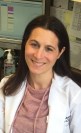 Shayne Robinson RD, CSO, CDN is an oncology dietitian at New York-Presbyterian. To make an appointment, call the Outpatient Nutrition Practice at (212) 746-0838 (physician referral required).

Jackie Topol, MS, RD, CSO, CDN is an integrative dietitian at Integrative Health at NYP – Weill Cornell Medicine, located at 211 East 80th Street. To make an appointment, please call: 646-962-8690.


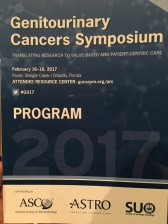 The third day of the 2017 Genitourinary Cancers Symposium started with a Best of Journals session on renal cell carcinoma (the most common form of kidney cancer) and the early poster sessions focused on renal cell, testicular, penile, and urethral cancers.
 The Keynote Lecture on renal cell carcinoma was delivered by Dr. Marston Linehan from the National Cancer Institute. He discussed the current state-of-the-art treatment which is based upon decades of research largely led by him on the genetic basis of renal cell carcinoma (RCC). Several of his discoveries about the genomics and biology of RCC have led to the current wealth of drugs available to treat this disease. One such discovery was the importance of the von Hippel Lindau gene in patients with familial cancer syndromes that also affects tumor genomics in most patients with clear cell RCC. This discovery led to investigation in
  The final session of the conference reviewed the opportunities and challenges in systemic therapy for advanced kidney (renal) cancer. Imaging techniques to optimally evaluate one’s response to targeted therapies was discussed, highlighting examples of successful treatment with very little change in tumor measurements by traditional techniques. For example, it’s possible for a tumor to appear the same size after treatment by standard measurement, but it can be 95% necrotic (dead) tissue and in this scenario, the patient feels better and may live longer. This would be classified as non-response (or stable disease). Unfortunately, for patients with larger or more invasive tumors, many patients are not cured with surgery alone despite normal scans elsewhere in the body. Dr. Karam reviewed the results of recently presented trials utilizing targeted therapy following surgery. While these are not quite ready for primetime, the medical community is currently awaiting the results of other studies well as current studies utilizing immune checkpoint inhibitors in combination with surgery. Drs. Vaishampayan and Jonasch discussed the multiple different treatment options available to physicians and patients with advanced RCC. Physicians were reminded to consider referral to a highly experienced center for
  What's New in GU?