
A Meeting of the Minds in Prague

prague-aua-programLast week, approximately 100 of the leading experts in genitourinary (GU) cancer research and treatment converged in Prague in the Czech Republic for the 114th Annual American Urology Association (AUA) Meeting. The AUA’s mission is “to promote the highest standards of urological clinical care through education, research and in the formulation of health care policy.”

The AUA has over 22,000 members from across the country, and many of the Weill Cornell Medicine/NewYork-Presbyterian GU physicians serve as members of the New York chapter. At this year’s meeting, doctors David Nanus, Jim Hu, and Scott Tagawa were invited to present on the latest standards in screening and treatment for prostate, bladder and kidney cancers.

jim-hu_aua-prague-2016On Thursday, September 15th, Dr. Jim Hu spoke about the screening controversy surrounding the early detection of prostate cancer and how this influences present day practice and the medical care men are receiving. We have a number of different screening tools available to detect prostate cancer and distinguish between aggressive and non-aggressive sub-types. One of the most common and least invasive ways to screen for prostate cancer is through Prostate Specific Antigen (PSA) testing, but this is controversial because some argue that it leads to false positives, or the detection of cancers that are very slow growing and may never need treatment. Most physicians and scientists agree that PSA testing isn’t perfect, but research shows that it can be a very good screening indicator when used in conjunction with physical exams, biomarkers and imaging tools. In addition, analysis of a recent study demonstrated that surveillance remains an option for some men with little difference in 10-year survival in those that choose treatment with either surgery or radiation, though there are tradeoffs in terms of a higher likelihood of developing advanced cancer in those that avoid more aggressive treatment.

Later that day, Dr. Scott Tagawa provided an update on the impact of chemotherapy in treating prostate cancer – a modality that was once thought to be a treatment last-resort. Chemo is now a standard much earlier on during cancer care and people are living longer, and feeling better as a result. In particular, the earlier use of a short course of chemotherapy at the time that men initially present to the clinic with advance prostate cancer leads to a significant increase in survival combined with better overall quality of life in the longer-term. The two taxane chemotherapy drugs proven to be successful in prostate cancer are docetaxel and cabazitaxel, and the latest research on these drugs seeks to answer questions regarding for whom and when these treatments will be benefit. At Weill Cornell/NYP we are leading the field in this research and developing hi-tech biomarkers to determine sensitivity and resistance.

Dr. David Nanus presented on Friday and highlighted the latest advances in treating urothelial cancers of the kidney and bladder. After nearly three decades with no new FDA drug approvals for bladder cancer, in 2016 we witnessed great treatment advances for bladder cancer. With immunotherapy, chemotherapy and genomics, we’re now on the cusp of precision medicine. The combination of these approaches with novel treatments is improving the lives of many of our patients with advanced urothelial carcinoma. We are now able to offer complete tumor and germline (inherited) genomic analysis as part of research studies that in the near term will translate to selecting the optimal treatment strategy for each individual patient.
Diagnosis Decisions: Surgical Options for Bladder Cancer

Choosing a replacement bladder that’s right for you

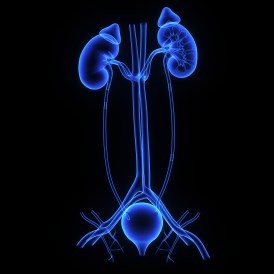
Excretory system

After being diagnosed with bladder cancer, it may be necessary to completely remove the bladder depending on the severity and location of the cancer. Medically, this is referred to as a radical cystectomy and involves the complete removal of the bladder, nearby lymph nodes, and part of the urethra. A radical cystectomy is the best treatment when the cancer has become invasive and has spread to the muscle layer of the bladder.

After the bladder is removed, the urine needs somewhere to go. Bladder cancer patients have options regarding the mechanism they would like to use to replace the role of the bladder and provide a way for urine to exit the body. This is sometimes referred to as a “urinary diversion” and there are different techniques used to divert the urine. Options include: a urostomy, neobladder reconstruction, or continent urinary reservoir construction. Each one has its unique advantages and disadvantages, and we have outlined some key factors to consider. The success of any of these options relies heavily on managing expectations. It’s critical that each patient has a realistic understanding of the advantages and disadvantages of each option.

  • An ileal conduit (urostomy) is a surgical procedure that allows urine to pass through a newly made opening on the body. In this procedure, a surgeon detaches one or both of the ureters from the bladder and attaches them to a small piece of intestine. This segment of intestine is then attached to the surface of the abdomen where an opening (also called a stoma) is made. A collection pouch then stores the urine outside the body since there are no muscles around the stoma to control the flow of urine. The segment of intestine simply acts as a “conduit” for urine to pass to the outside. Depending upon fluid intake, the external bag needs to be emptied every 6 hours and the external appliance is typically changed every 3-5 days. One can be quite active with this device and can still exercise, including swimming and running.
  • Orthotopic neobladder reconstruction is a surgical procedure in which an entirely new bladder is constructed from the intestine to replace the bladder. Typically, a small section of the small intestine is used to create a sphere shape that can store and pass urine through the body as a normal bladder would. This procedure leaves the patient with the urine storage and exit route that most closely resembles that of the original bladder. While this new bladder serves as a great replacement for the original bladder, it does require some re-learning on behalf of the patient in order to void without any difficulties. After three months post-surgery, most men and women can void quite well. Some nighttime incontinence can linger for the first year.
  • Continent urinary reservoir is a surgical procedure where an internal reservoir is made from a segment of the intestine. Instead of voiding, however, the patient needs to catheterize themselves through the belly button (umbilicus) in order to drain the urine. A valve mechanism is made in order to retain urine that the patient can drain on their own. Much like the urostomy previously discussed, a pouch to collect urine is used in this method, however now the pouch is internal. This procedure also requires ongoing maintenance to empty the pouch through intubation every 4-6 hours and can result in urinary leakage. Most patients are quite happy with this type of diversion in that they never leak urine and they do not require any external bags. They do, however, need to always have a catheter with them in order to empty their bladders.

Choosing which method to use really depends on the individual and what best meets his or her lifestyle. It is important to understand how all the options work prior to making a decision. For example, neobladder reconstruction is a good alternative for those who do not want a stoma or to deal with an external pouch involved with a urostomy, however people who choose this option must then learn neobladder training and adjust to a new normal with a bladder that has slightly different capabilities.

Here at Weill Cornell Medicine and NewYork-Presbyterian, we offer all three types of bladder reconstruction surgeries. Approximately 50% of our patients choose ileal conduits and the remaining 50% is split between neobladder reconstruction and continent urinary reservoir. We encourage you to speak with your physician about which replacement bladder is right for you.

We perform all of these surgeries robotically. Robotic-assisted cystectomy (also known as da Vinci cystectomy) is a minimally invasive surgical method that is done with cutting-edge robotic equipment guided by the hands of a surgeon. This technique is able to mimic a surgeon’s movements with even greater precision. It has several benefits ranging from less tissue and nerve damage to reduced blood loss and decreased risk of infection. Additionally, it is the only robotic surgery approved by the Food and Drug Administration (FDA).

Our medical center has the largest single surgeon robotic cystectomy experience in the world, and through this procedure we have been highly successful in removing tumors and creating replacement bladders, while simultaneously maintaining urinary continence and maximizing cancer cure rates. Learn more.

When Food and Cancer Meds Don’t Mix

Food_Meds_CancerWhat you eat and drink can affect the way your cancer medication works. It is important to have a well-balanced diet and to make sure you are getting enough nutrients, while simultaneously avoiding foods that could alter treatment or damage your body.

After oral medications are ingested, the drugs are broken down and absorbed by the body. This process begins in the digestive system. Sometimes, certain drinks, foods, and medications don’t mix. That’s because levels of certain enzymes in our gut (which are responsible for breaking down large substances into smaller substances) change during the digestive process. These changes can increase or reduce the level of the medication that gets absorbed by the body, making some meds weaker and others stronger. This is problematic because doctors intentionally prescribe a specific dosage based on your type and stage of cancer, as well as other factors such as your height and weight.

Additionally, there are several negative “food-drug interactions” that are well established. For example, grapefruit interferes with the action of some cancer medications since it affects the way enzymes work. Grapefruit has the ability to increase absorption of the drug into the bloodstream, which can be very dangerous. By amplifying the effect of a drug, the medicine is no longer working in the way it was intended and there is increased risk for unexpected side effects and liver damage. This can be very harmful to the body and make the treatment side effects more difficult.  

When in doubt, check the label or package insert of your medication. More than likely, there will be certain foods that your medicines should not be mixed with and directions on how the meds should be taken. For example, the time of day and whether they should be taken with water or food, on an empty or full stomach, etc. These directions are there for a reason, but don’t hesitate to ask your doctor or pharmacist if you are uncertain about these instructions or specific restrictions.

Sometimes, cancer patients turn to vitamins and supplements after learning of a cancer diagnosis. Whether the goal is to seek out alternative medicine, strengthen the immune system, or lessen the treatment side effects, it’s important to always speak with your physician before taking anything. However, there is no conclusive data showing that supplementation benefits cancer patients, so it is not recommended that vitamins and supplements be used. They can interfere with treatment and cause discomfort.

Our team includes dietitians who specialize in cancer care and can provide you with additional information about what to eat and what to avoid in order to reduce side effects and potential negative drug interactions.

Read more about supplement usage with cancer treatment from our oncology dietitian, Shayne Robinson, RD, CSO, CDN, who recently wrote a great piece on the topic for the Weill Cornell Medicine Lymphoma Program’s blog.