
8 Tips to Combat Chemo-Related Sun Sensitivity

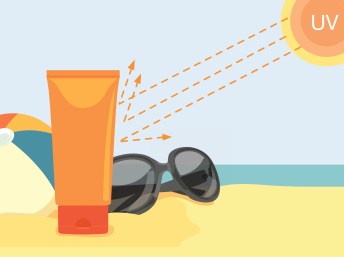
Sunblock Cream Reflect UVSummertime often means vacations and more time outdoors. This also comes with increased exposure to the sun – which isn’t such a “sunny” thing if you’re feeling sensitive to it.

A side effect of chemotherapy that many cancer patients express they feel the most is sun sensitivity. This “photosensitivity” occurs because agents in chemotherapy are radiosensitizers which help to impact treatment, but also increase the body’s sensitivity to UV rays (the radiation from the sun that reaches the earth).

A little bit of sunshine can be beneficial, since the sun provides Vitamin D for strong bones, but too much exposure during chemotherapy can be dangerous and increase your risk of sunburn. Here are 8 tips to protect yourself from the sun’s harmful rays during and after chemotherapy:

  • Chemo and the sun don’t get along. Photosensitivity can start immediately after your first treatment and last for a few months post-treatment. Several kinds of medications (for cancer and non-cancer alike) can also increase sun sensitivity; so ask your physician and pharmacist if you’re taking any medications that fall in this category.
  • Watch the clock. Avoid mid-day sun exposure when the sun’s rays are most intense. In most places, the sun is the strongest between 10am-4pm.
  • Pay to attention SPF. SPF stands for Sun Protection Factor and represents the theoretical amount of time you can stay in the sun without getting burned. It is important to use sunscreens with protection above 30 SPF and to make sure the SPF includes protection against both UVA and UVB rays (labeled as “broad spectrum”). These two different types of rays can both cause sunburn.
  • Lather up! Reapply sunscreen every two hours or even more frequently if you’re sweating or swimming.
  • Bald is beautiful, but protect your head. Wear a wide-brimmed hat in addition to sunscreen if you have lost your hair, and in general to help protect your ears, neck and face further.
  • Stylize with shades. Wear sunglasses with UV protection to protect your eyes any time the sun is out. If your wear prescription eyeglasses, consider getting transitional lenses so that you don’t have to worry about carrying an extra pair.
  • Cover-ups are key. Cover your exposed skin as much as possible. Wear long-sleeve shirts and pants so that your body is not directly hit by the sun. Many companies now make sun protective clothing which are light, breathable and offer excellent sun protection without the need for constant re-applying of sunscreen to the covered areas.
  • Don’t forget the small spots. Ears, eyelids, feet, and lips can be easily forgotten but need extra protection. Use lip balm with SPF to protect your lips, inquire with your oncologist or dermatologist regarding sunscreens for sensitive areas, and don’t forget to put sunscreen on your ears and top of your feet (two areas that are directly hit by the sun).

In the case of a sunburn, use cold compresses and aloe vera to ease discomfort. Contact your physician if redness persists or if your sunburn is severe.

Best of ASCO 2016: Prostate Cancer Treatment Updates

Beltran_HeadshotLast weekend, Dr. Himisha Beltran traveled to Washington, D.C. to speak at the “Best of ASCO” meeting. She hosted the session on prostate cancer and summarized some of the most important studies presented at the 2016 American Society of Clinical Oncology (ASCO) meeting in Chicago.

She also represented Weill Cornell Medicine and NewYork-Presbyterian on a panel of the nation’s leading experts. The panel answered questions regarding some of the most challenging cases in genitourinary (GU) cancer care.

What’s new in research and treatment?

For men with advanced (metastatic) prostate cancer, the class of chemotherapy that has consistently proven to improve survival is called “taxanes.”

There are two taxanes that have been FDA-approved to treat prostate cancer, docetaxel (brand name: Taxotere) and cabazitazel (brand name: Jevtana). While these drugs are similar, men whose tumors have grown despite taking one drug often respond to the other.

Much of the important research at this year’s ASCO meeting focused on some key questions related to these two treatment options:

1. What treatment dose is best to maximize response, but minimize side effects?
2. Does the order in which patients receive these treatments matter?
3. When should oncologists switch between treatments if one is not working?
4. What is the impact on quality of life?

Another hot topic was the value and cost of treatments, and the link between treatment cost and access to care, since there can be financial barriers associated with certain treatments.

Below, we’ve outlined some of the key studies and clinical takeaways for prostate cancer treatment that Dr. Beltran discussed at the Best of ASCO meeting:

Chemotherapy Updates
  • For patients with untreated metastatic prostate cancer, large studies have recently demonstrated the improved survival impact of using a combined treatment of both chemotherapy and hormonal therapy as opposed to only hormonal therapy for men with metastatic prostate cancer. A new research study examined the CHAARTED study data and evaluated the quality of life (QOL) of patients treated on the study. This research found that while the QOL was initially worse (at 3 months), there was no long-term negative impact, and QOL was better at 12 months for chemo patients relative to those who only received hormonal therapy. This has important implications for counseling patients, as some are worried about side effects. It is comforting to know that while side effects may occur, they are temporary and the longer-term benefit of cancer control leads to improved QOL in the longer term.
Radiation Updates
  • A randomized trial examined radiation therapy for treating localized prostate cancer that had not spread beyond the prostate gland in men with intermediate risk disease. This study compared the standard eight-week course of treatment with a shorter course of four weeks, called hypofractionation. The shorter course of treatment did not see any reduction in treatment response and did not increase toxicity. The results from this study in combination with two other similar studies (RTOG 0415 and ChIPP) support using hypofractionation as a new standard for men with intermediate risk prostate cancer, as it is more convenient since it requires fewer visits to complete and is potentially less costly for patients.
Genomic Updates
  • In a large multi-institutional study of nearly 700 patients (including Weill Cornell), over 11% of patients with metastatic prostate cancer had inherited mutations in DNA repair genes (such as BRCA2 or ATM). This has important family risk and treatment implications since these genes can be passed down through the family tree and are not only linked with prostate cancer, but other cancer risk, as well. This is practice changing and supports genetic counseling and testing for all men with metastatic prostate cancer. In addition, research is ongoing to utilize drugs that may work especially well in this situation.

Freedom from Cancer

Fireworks_Fourth of JulyThis Fourth of July holiday, we’re not only celebrating the red, white and blue that honors the independence and freedom of our country, but also freedom from cancer and the cancer “blues.” Feeling this sense of freedom may mean that you’re cancer-free or that you’re unwilling to let a cancer diagnosis define you.

To be cancer-free means that tests show no evidence of any cancer remaining in the body, a term coined “complete remission.” In some cases, it is possible to complete treatment but still have some evidence of the cancer. This is called “partial remission.”

At Weill Cornell Medicine and NewYork-Presbyterian Hospital, many of our patients and their families experience a wide range of emotions during and after treatment for kidney, prostate, bladder and testicular (genitourinary or “GU”) cancers. Often, freedom from cancer is both something to celebrate and something that comes with an air of caution. That’s because the joy of being cancer-free may be accompanied by fear that the cancer may return.

Some cancers can and do come back after treatment. This is called “recurrence.” Recurrence can depend on several factors, including the type of cancer, whether it has spread from the original source and how the cancer responded to treatment. While there is no foolproof way to keep cancer from coming back, there are many things you and your healthcare team can do to monitor what’s going on in your body.

You may feel differently than you did before treatment, both physically and mentally. And that’s okay. It’s important to be in tune with your body and your new normal so that you can be mindful of any bodily changes.

It’s also important for cancer patients and survivors to lead a healthy lifestyle. This includes eating a healthy diet, being physically active (under the supervision of your healthcare team), and regularly following up with doctors’ appointments and routine medical tests. Cancer survivors can live very long and full lives, so routine medical tests and appointments aren’t limited to following up with your oncologist and getting scans and imaging tests. It’s important to also get regular physical exams and monitor other markers for diseases such as cholesterol, diabetes, high blood pressure and heart disease.

Routine follow-up tests may also identify the recurrence of cancer even before symptoms develop. Since cancer can come back in the same part of the body or in another part of the body, signs and symptoms may differ from those involved with your original diagnosis. For instance, an increase in fatigue, the development of new pain or worsening of existing pain, weight loss, urinary changes (including blood in urine), and other changes in the way you feel should be discussed with your physician, especially those that persist.

This Independence Day, as you enjoy time with your family, watching fireworks, and celebrating other traditions, take a moment to think about independence from cancer. Our support groups can help by providing a safe space and community for prostate cancer and kidney cancer survivors, patients and their families.

Have a wonderful holiday!