
 Through clinical trials, we are able to develop safe and more effective ways to detect, diagnose and treat cancer. All clinical trials have a sponsor, which means there is an organization or person involved in the design and support of the study. The sponsor is usually a pharmaceutical company, academic institution or government body. In the United States, there has been a fairly recent increase in the number of government-sponsored studies.
The majority of cancer clinical trials are led by the National Cancer Institute (NCI)-sponsored cooperative groups. This means that cancer specialists across hospitals, medical centers and community clinics can more easily collaborate with one another through a formalized group. One major advantage of NCI-funded cooperative group clinical trials is the ability to study diseases and/or treatments that may be less interesting or practical for pharmaceutical companies or individual academic centers.
Following a series of recommendations leading to mergers, there are now five main groups in the US that form the NCI Clinical Trials Network (NCTN). One of these main groups, the Alliance for Clinical Trials in Oncology, was formed in 2011 after the merger of Cancer and Leukemia Group B (CALGB), North Central Cancer Treatment Group (NCCTG) and the American College of Surgeons Oncology Group (ACOSOG). These mergers streamlined many research efforts that were previously happening on parallel or competing trajectories.
Weill Cornell Medicine (WCM) has investigators involved in all five of the major cooperative groups, but is most heavily involved in the leadership of the Alliance. Dr. Scott Tagawa, Medical Director of the Genitourinary (GU) Oncology Program, serves as Weill Cornell Medicine’s Principal Investigator for the Alliance and a member of the Board of Directors. Dr. John Leonard serves as Chair of the lymphoma committee and member of other leadership committees.
There are many WCM investigators currently leading studies within the Alliance group. The GU committee has a high level of involvement by our medical oncologists, Drs. Tagawa, Beltran, Molina, Nanus, and Faltas. Additionally, Dr. Barbieri and other urologists from our team have recently become more involved in the Alliance.
We have a long history of participation in the GU oncology studies through CALGB and the Alliance, most recently with completed studies in early stage prostate cancer. These include testing:
- Dietary intervention in men with low risk disease who are on active surveillance (Clinical Trial ID: 70807)
- Chemohormonal therapy prior to surgery in men with high risk disease (90203)
- The addition of antiangiogenic therapy in addition to chemotherapy for advanced urothelial carcinoma (90601)
- Testing the impact of targeted oral therapies in curbing the spread of cancer in patients with intermediate to high risk, advanced renal cell carcinoma (RCC) (A031203)
Through our cooperative groups, we are currently accruing to studies in advanced prostate cancer and early stage bladder cancer with additional new clinical trials in the works.
Prostate cancer:
- For men with metastatic prostate cancer who are either beginning hormone therapy for the first time, or have been on hormone therapy for less than 30 days
- A randomized phase III trial using enzalutamide to see how well it works compared to enzalutamide, abiraterone, and prednisone in treating patients with castration-resistant metastatic prostate cancer
Bladder cancer:
The Alliance for Clinical Trials in Oncology is committed to reducing the impact of cancer on people by uniting nearly 10,000 scientists and clinicians across the United States and Canada, from many disciplines, hospitals, medical centers and community clinics. Together we’re discovering, creating, validating and implementing new, more effective strategies to prevent and treat cancer; we’re proud to be part of it!
 On Monday, April 18th, Dr. Scott Tagawa presented
 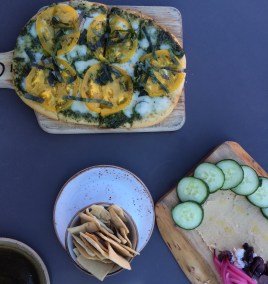 Sweet, salty, savory and sour are words we often use to describe different flavors in the foods we eat, but cancer and its treatments can turn your sense of taste upside down. It is normal to experience taste changes as a result of cancer and cancer treatment. Some people report a bitter or metallic taste in their mouth, while others find that their overall sense of taste has diminished.
 What's New in GU?